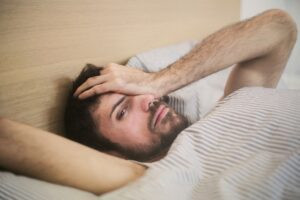
Your alarm goes off, and you open your eyes. But you can’t think straight; you’re not sure where you are for a moment, and getting out of bed feels close to impossible.
This is sleep drunkenness, a state of heavy grogginess and confusion that lingers after you wake up. It can leave you foggy, clumsy, and unable to function for a few minutes or, in some cases, an hour or longer.
If mornings like this happen to you often, it may be more than ordinary morning grogginess. You can be experiencing sleep drunkenness because your brain is having trouble making the switch from sleep to wake.
Here’s everything you need to know, and a few evidence-based strategies that can help.
What Is Sleep Drunkenness?
Sleep drunkenness is an intense, drawn-out version of the grogginess most people feel when they first wake up. Your body is awake, but parts of your brain are still transitioning out of sleep. You might move around, talk, or answer your phone, but parts of your mind are still in a sleep-like state.
It’s called “sleep drunkenness” because people in the middle of an episode can seem intoxicated, with slurred speech, poor coordination, and confused thinking, even though no alcohol is involved. Some people have no clear memory of what they said or did during those groggy moments.
Sleep drunkenness is more common in people with sleep disorders, and it’s closely tied to a condition called idiopathic hypersomnia, where extreme daytime sleepiness is a defining feature. It can also happen to anyone after a rough night or a stretch of too little sleep.
Because it’s easy to mistake for ordinary tiredness or a bad mood, it often goes unreported and undiagnosed.
Sleep inertia vs sleep drunkenness
Everyone experiences some grogginess after waking. That normal fog is called sleep inertia, and for most people it clears within a few minutes as the brain fully comes online.
Sleep drunkenness is sleep inertia turned up to an extreme. Instead of shaking off the fog in a few minutes, you stay confused and disoriented for much longer, sometimes an hour, occasionally several.
Sleep drunkenness can sometimes resemble confusional arousals, a type of NREM parasomnia that causes confusion during partial awakenings from sleep.
A short bout of morning grogginess is expected and harmless. But a long, disabling episode that leaves you unable to think, drive, or make decisions may be more than ordinary sleep inertia.
Sleep Drunkenness Symptoms
Sleep drunkenness affects how you think, move, and feel after waking. The symptoms come as your brain struggles to fully transition from sleep to wakefulness.
Common signs include:
- Feeling drugged or foggy, as if you can’t fully surface
- Confusion or disorientation about where you are or what time it is
- Slowed speech and trouble finding words
- Poor concentration
- Difficulty making simple decisions
- Clumsy, uncoordinated movements
- Needing multiple alarms or repeatedly hitting snooze
- Falling back asleep without meaning to
- Irritability or a short temper right after waking
- Patchy or missing memory of those first waking minutes
- Inappropriate behavior or even violent behavior
These symptoms can last from a few moments to well over an hour. When episodes happen regularly, they can interfere with daytime functioning and make mornings particularly difficult.
What Causes Sleep Drunkenness?
Sleep drunkenness happens when the transition from sleep to wakefulness is unusually difficult or prolonged. Several factors can make this more likely, from insufficient sleep and disrupted sleep schedules to underlying sleep disorders.
The triggers fall into two broad groups. Some are everyday circumstances that can affect anyone, and others point to an underlying medical cause.
Everyday triggers include:
- Waking directly out of deep, slow-wave sleep
- Not getting enough sleep over days or weeks
- Being woken suddenly, such as by an alarm or another person
- Waking from a long nap
- Waking during the biological night, when your body expects to be asleep
- Working shifts that pull your sleep out of sync with your internal clock
Medical conditions and factors associated with sleep drunkenness include:
- Idiopathic hypersomnia, a disorder marked by extreme daytime sleepiness
- Obstructive sleep apnea, which fragments sleep through the night
- Circadian rhythm disorders that shift when your body wants to sleep and wake
- Ongoing insufficient sleep
- Certain medications, including sedatives, hypnotics, and some psychiatric drugs
- Alcohol
- Mental health issues and psychiatric disorders, such as bipolar disorder
Untreated sleep disorders raise the likelihood of sleep drunkenness. You’re also at greater risk if you’re a young adult or work shifts.
In a nationwide study, the average person shook off morning grogginess in about 16 minutes, but that stretched to nearly 30 for people with anxiety and grew longer for those sleeping under six hours.

Sleep Drunkenness Treatment
There’s no single treatment that resolves sleep drunkenness. As a sleep therapist, I often see people go hunting for the perfect alarm clock, app, or wake-up hack, but when there’s significant sleep inertia or an underlying sleep disorder in play, no gadget is the ultimate fix.
There isn’t one established treatment for sleep drunkenness. What helps depends partly on what’s contributing to it, whether that’s insufficient sleep, an irregular sleep schedule, circadian timing, or an underlying sleep disorder.
Most of the strategies that help are about giving your brain steadier signals around sleep and wake:
- Keep a consistent wake time, even on weekends and after a poor night
- Avoid chronic sleep deprivation, since built-up sleep pressure deepens the fog
- Get outdoor light in the morning to reinforce your circadian rhythm and support daytime alertness
- Move your body shortly after you get up, even a short walk
- Avoid repeatedly hitting snooze if it makes waking feel more difficult
- Build in a buffer before driving or anything that needs sharp focus
- Be thoughtful about naps, since longer naps can sometimes make sleep inertia worse
- Get any underlying sleep disorder properly diagnosed and treated
If waking remains extremely difficult despite getting adequate sleep, talk with a sleep specialist. Persistent or severe sleep drunkenness can sometimes be a sign of an underlying sleep disorder that needs further evaluation.
It also helps to reframe what’s going on. Many people assume they have a motivation problem when they have a wakefulness problem. But waking up is genuinely harder for some people than others, and the goal isn’t to shame yourself into getting up earlier. It’s to understand what’s making waking so difficult and build strategies around it.
Sleep drunkenness and CBT-i
CBT-i, or Cognitive Behavioral Therapy for Insomnia, is a structured, evidence-based therapy for insomnia. CBT-i is generally not a direct treatment for sleep drunkenness, but it may help when insomnia, an inconsistent sleep schedule, or other sleep habits are contributing to difficult mornings.
Improving your sleep quality, reducing sleep deprivation, and stabilizing your wake times can all ease sleep inertia, and that’s what CBT-i helps you with.
Learn more about sleep therapy.
FAQs
Is sleep drunkenness dangerous?
The episode isn’t harmful, but the impaired state can be. During an episode, your judgment, coordination, and reaction time may be impaired, so driving or handling anything that needs full attention before the fog lifts can be risky. Some people also act in confused or out-of-character ways and have no memory of it afterward. The safest approach is to give yourself time to fully wake before doing anything demanding, and to get an evaluation if episodes are frequent or severe.
How long does sleep drunkenness last?
It varies. Sleep drunkenness can last anywhere from a few minutes to an hour, and occasionally longer. Ordinary sleep inertia usually fades within minutes of waking. Sleep drunkenness tends to be more intense and prolonged than ordinary sleep inertia, with significant difficulty becoming fully alert and functional after waking.
Can sleep deprivation cause drunkenness?
Yes. Not getting enough sleep can make sleep inertia more intense and waking more difficult. If you’re chronically sleep-deprived, getting adequate sleep and keeping a relatively consistent sleep schedule may help reduce severe morning grogginess.
What does sleep drunkenness feel like?
People may describe feeling drugged or foggy, confused about where they are or what time it is, and unable to think or move normally. Speech can slow, decisions feel hard, and coordination is off. You may hit snooze repeatedly, fall back asleep without meaning to, or have patchy memory of those first waking minutes. From the outside, it can look like intoxication, even though no alcohol is involved.
Can sleep drunkenness be cured?
There’s no single cure or treatment plan because treatment depends on what’s causing the difficult awakening. Addressing insufficient sleep, circadian disruption, medications, or an underlying sleep disorder may help when one of those factors is contributing. If sleep drunkenness is frequent, severe, or interfering with daily life, working with a sleep specialist can help identify the cause and appropriate treatment.
How Sleep Therapy Can Help
At DC Metro Therapy, we help people who struggle with sleep using CBT-i and IRT/ERRT.
Your difficult mornings have nothing to do with your willpower, and understanding your overall sleep pattern can help identify factors that may be making waking more difficult.
If you’re struggling with insomnia or ongoing sleep difficulties alongside difficult mornings, sleep therapy can help you build an evidence-based plan for improving your sleep.
If severe difficulty waking persists despite getting adequate sleep, it’s important to talk with a sleep physician about whether further evaluation is needed.
Learn more about sleep therapy, or try our Sleep Calculator to find your optimal sleep and wake times.